SenseStep
A VR safe space designed to support individuals transitioning into deafness through guided learning and immersive interaction.
Project Overview

Industry
VR
Location
Sydney
Project
XR / VR Interaction Design
Score
HD
Challenge
Solution
SenseStep creates an immersive VR environment designed to support this transition. The concept blends education, social interaction, and emotional safety through guided tutorials, roleplay scenarios, and sensory-aware environments that let users learn, experiment, and build confidence at their own pace.
Result
What I Learned
So Where Did We Start?
Transitioning to deafness can be isolating and overwhelming. It’s not just a physical change, many face emotional, social, and communication challenges, especially in environments that lack accessibility or support. This may cause newly deaf individuals to struggle to advocate for their needs, access appropriate tools and support, or feel a sense of belonging, thus lowering their confidence and wellbeing.
Which led me to wonder….
💭 Discovery
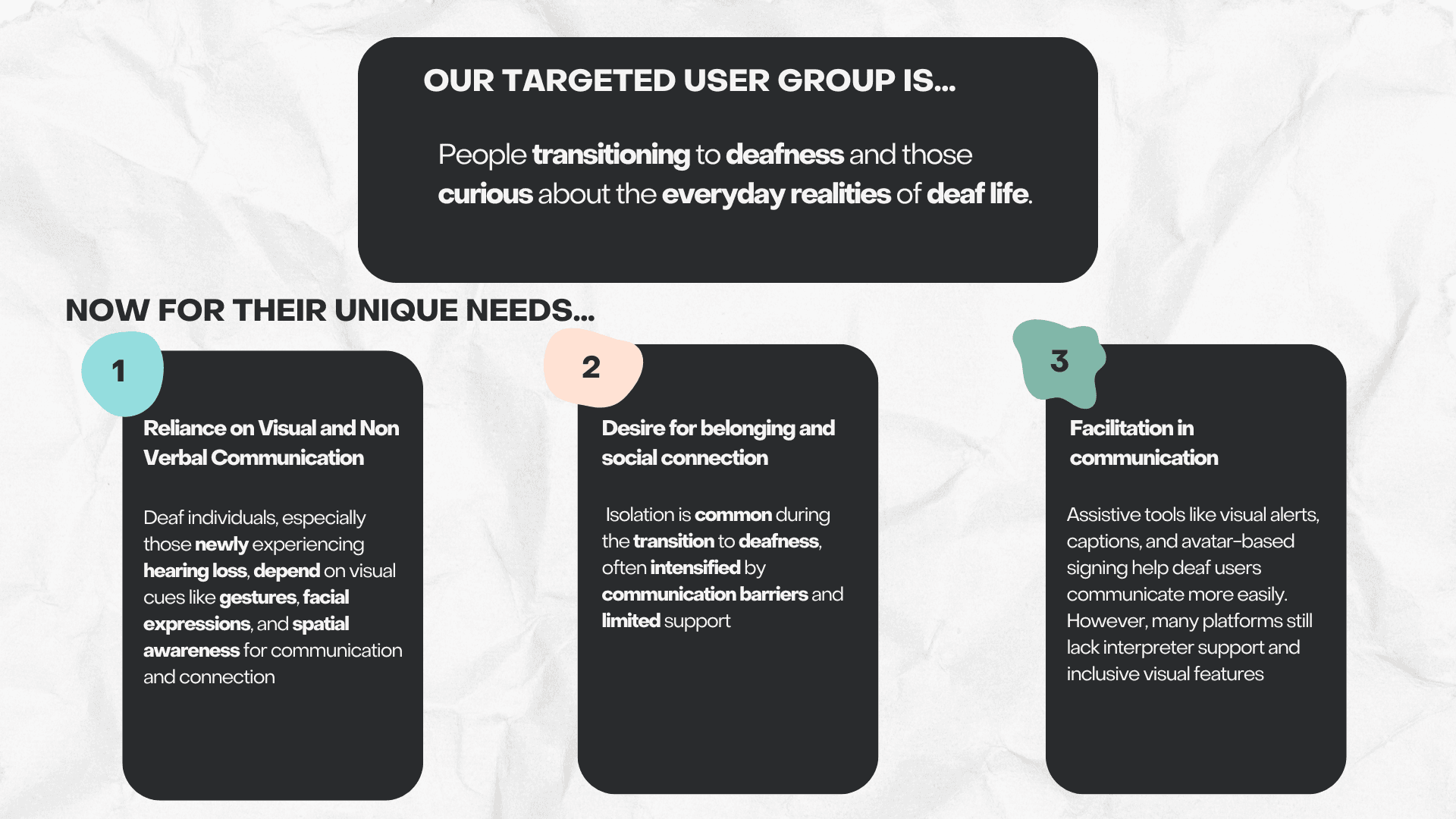
In order to make a well-versed products within our problem space we first had to conduct extensive research into our target audience and their unique needs, which included
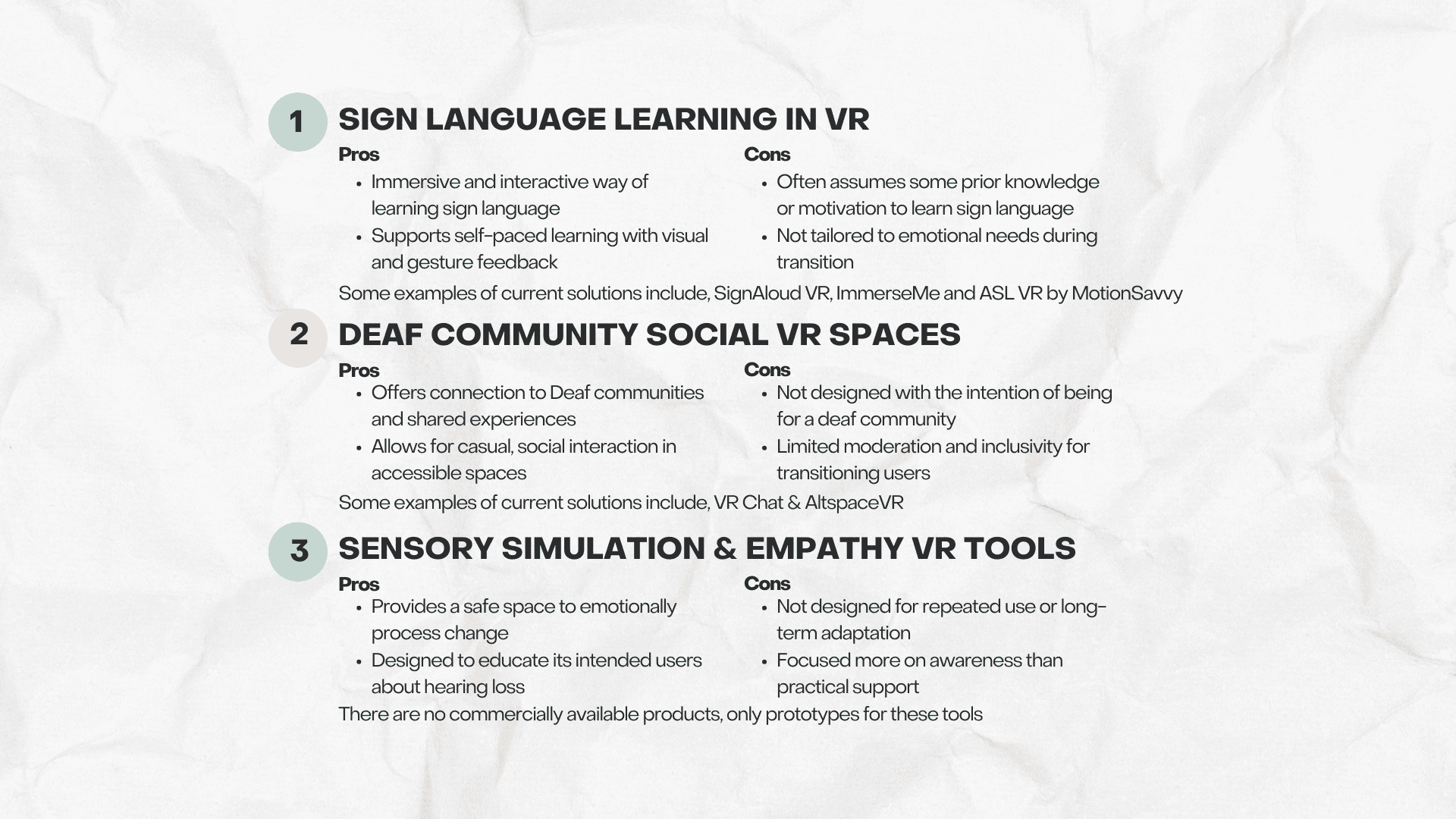
To ensure that we are making a unique products that effectively meets the needs of our target audience we conducted a competitor-analysis to effectively observe what current solutions do right and wrong as per our problem space. Here's what we found…
Development 🔨
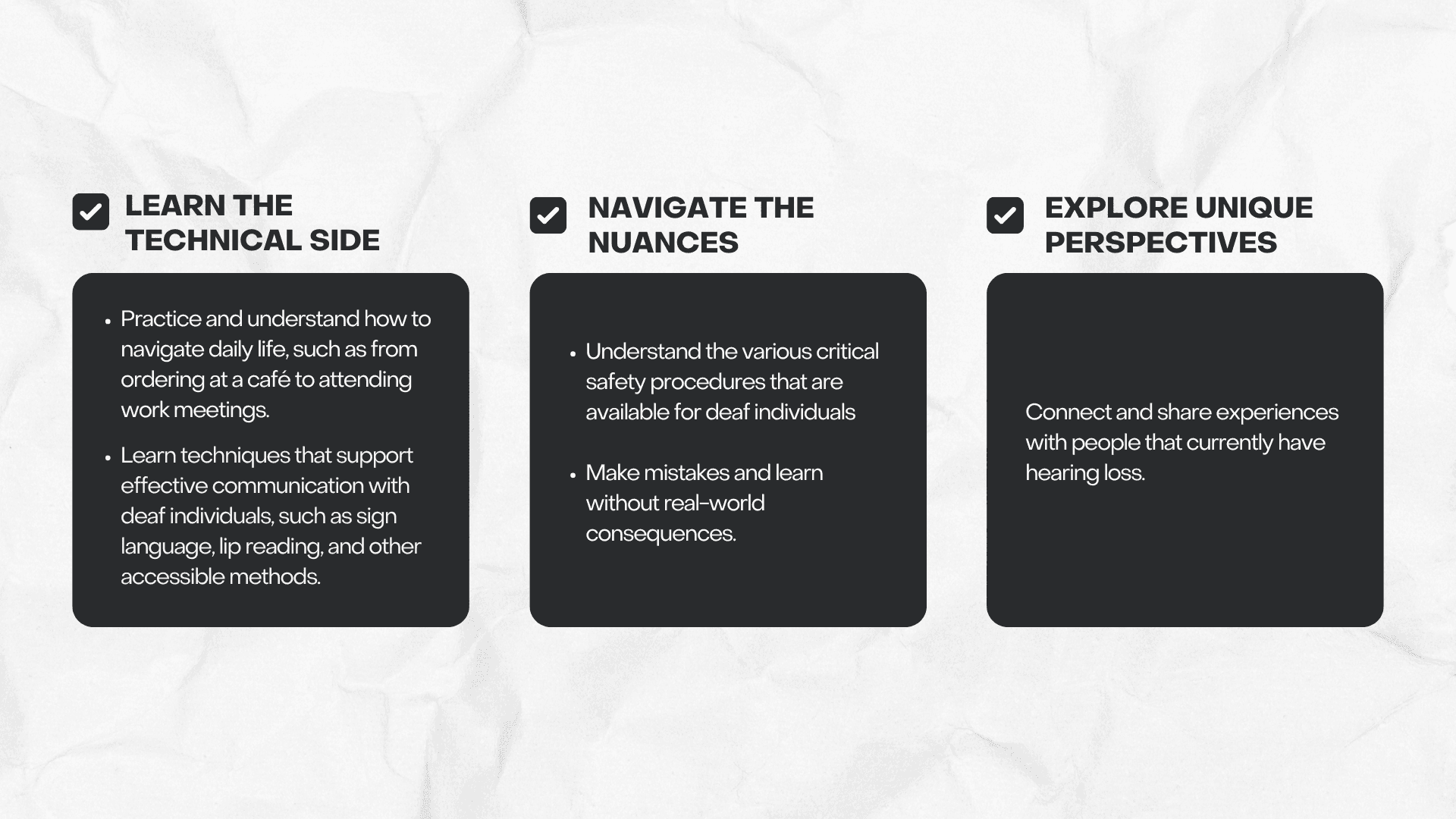
Our proposed concept is an informatic and social environment which will address the challenges faced by individuals transitioning into deafness by providing a safe, interactive, and educational space to help them adapt or learn about their new environment. To be more specific, users will be able to:
But lets take a quick look at what this actually looks like through our annotated concept drawings
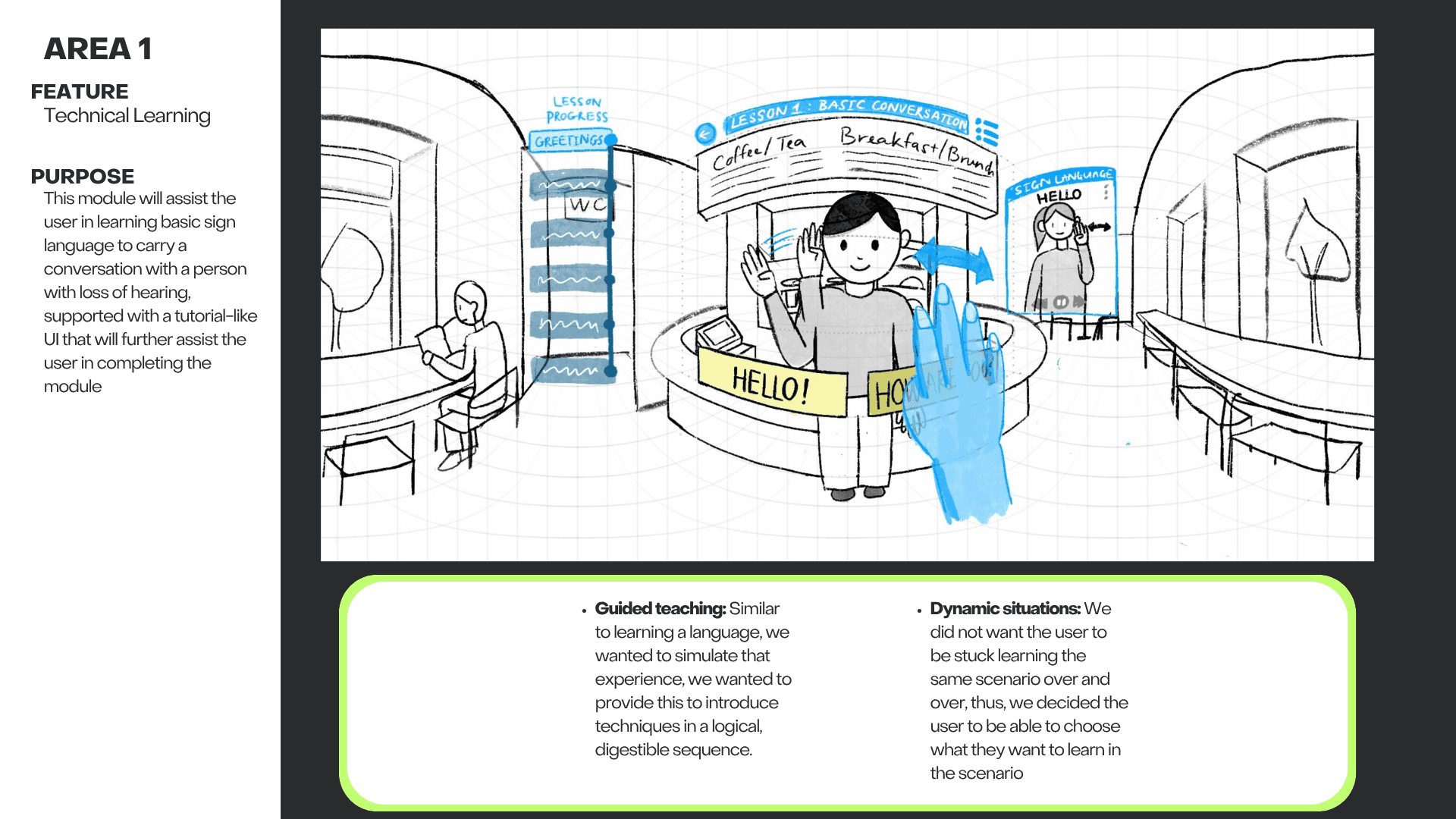
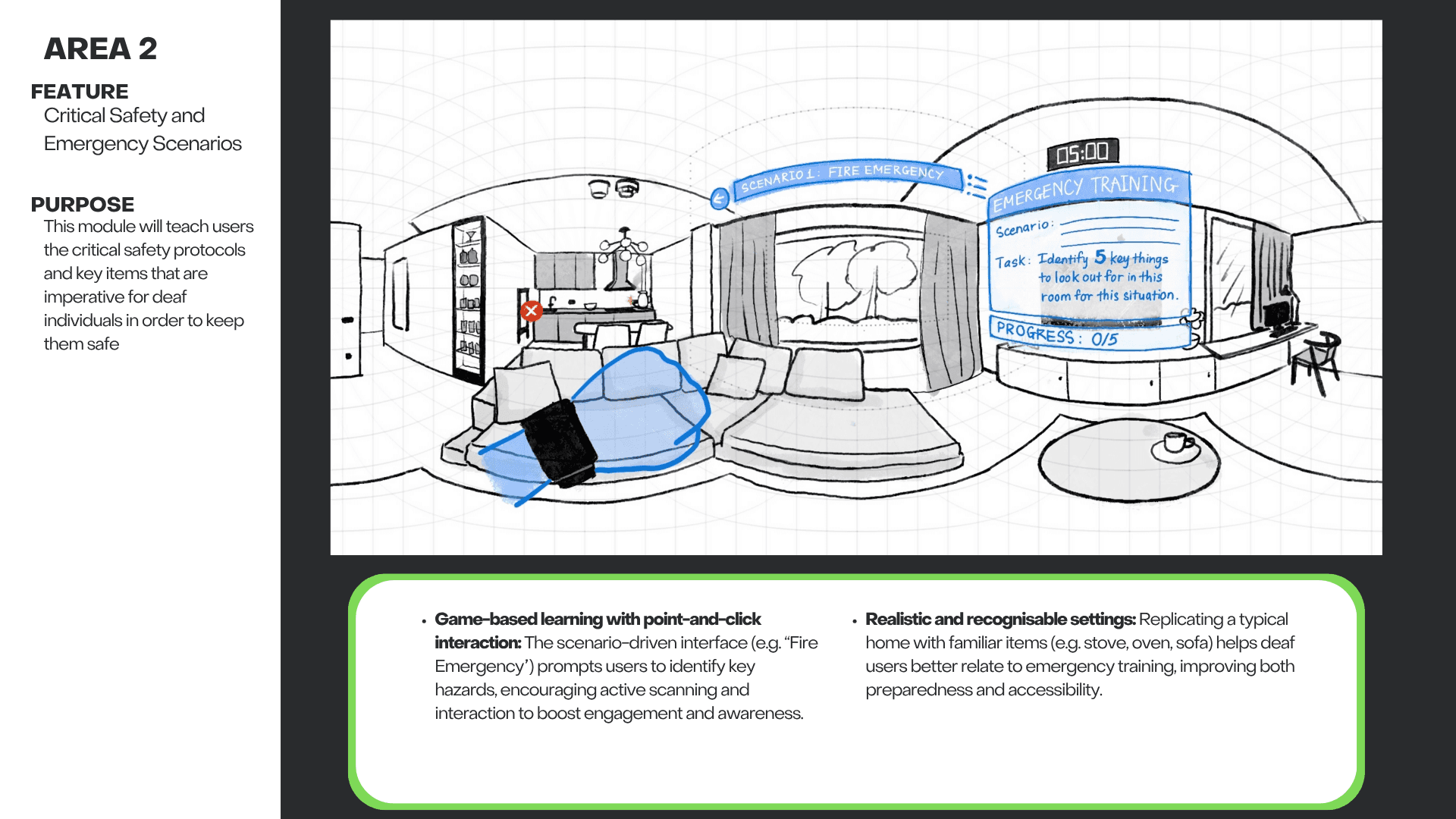
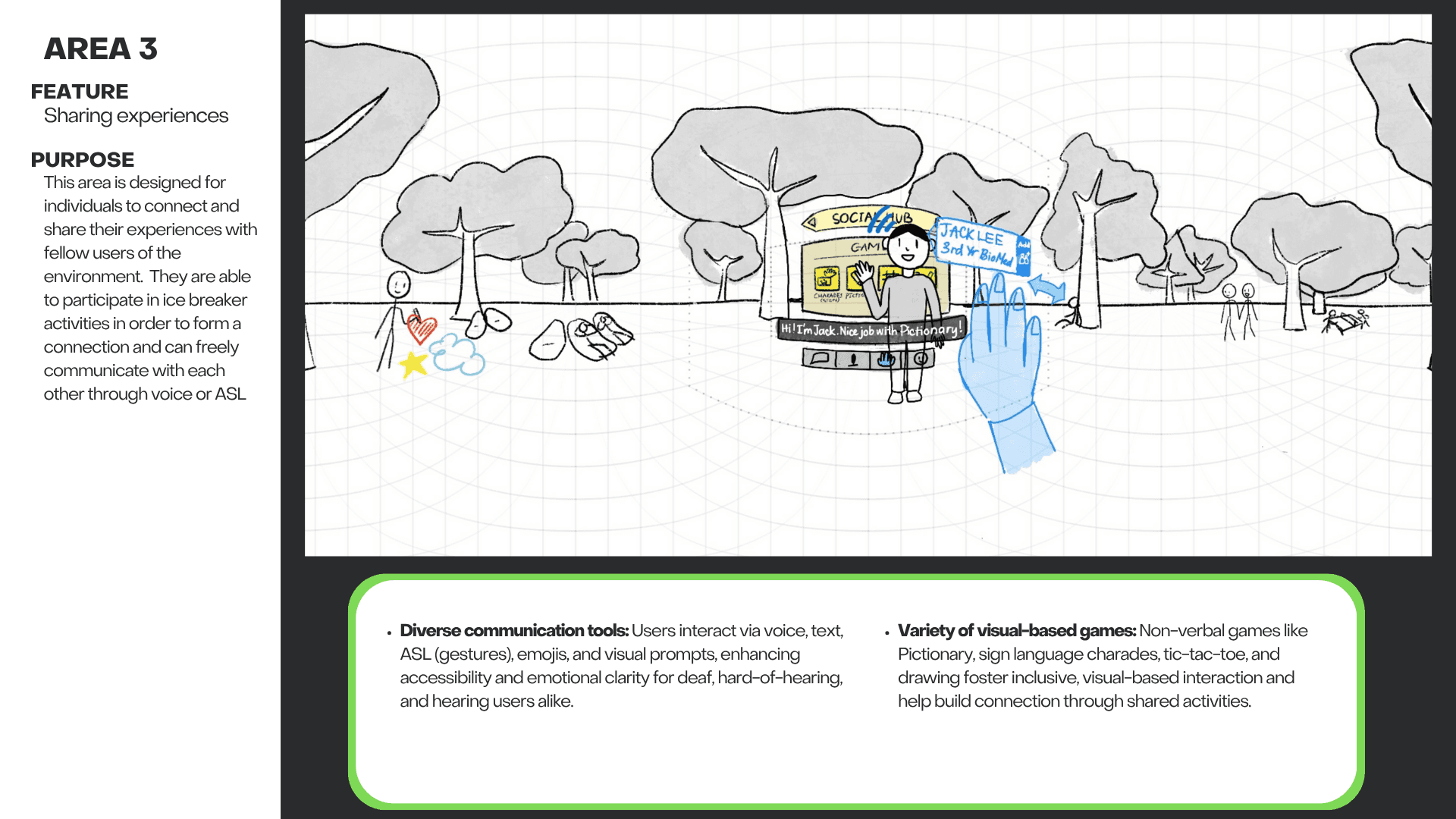
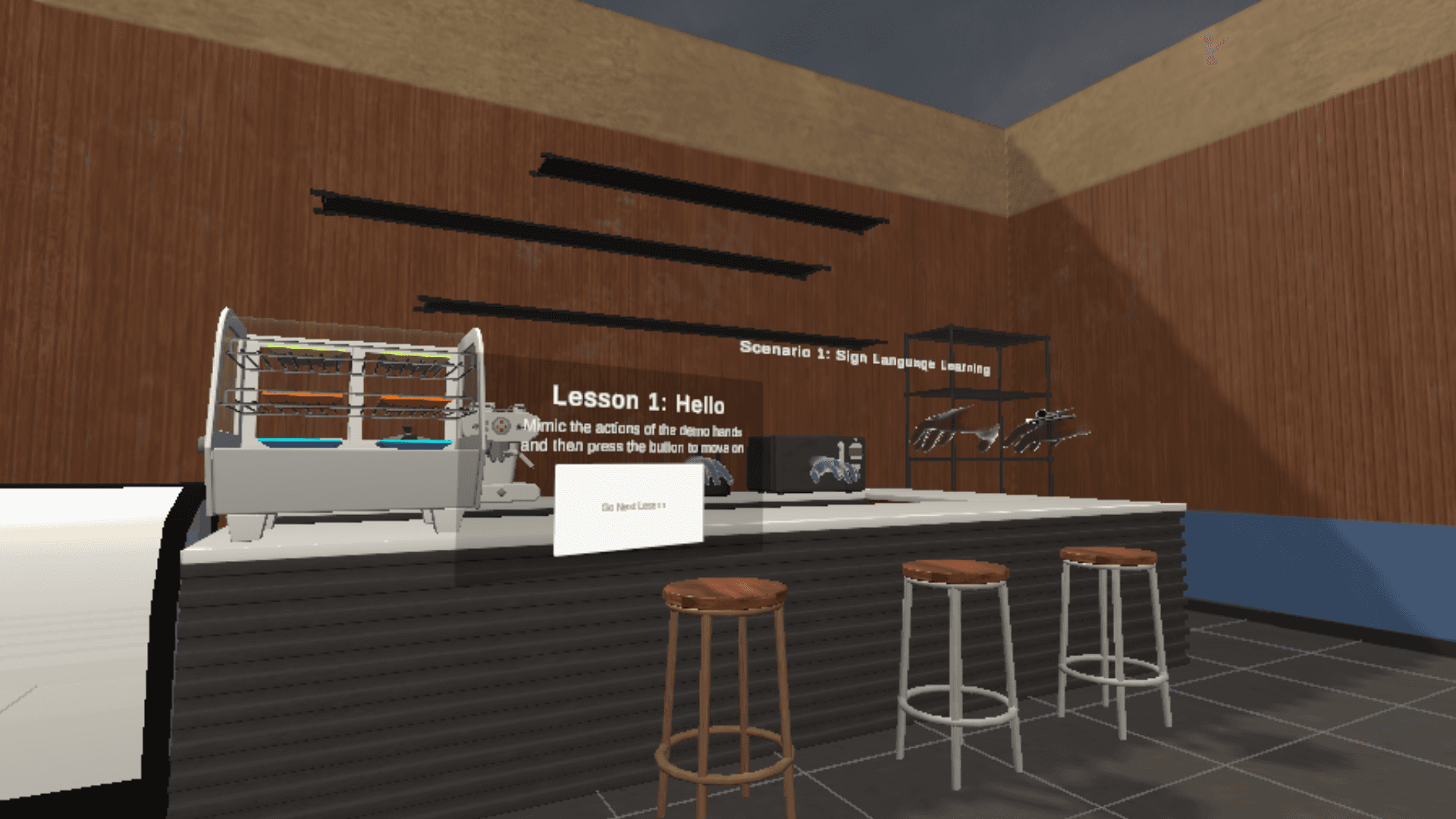
But how did we translate our concepts into a basic interaction within VR? Well to rapidly develop a working interaction we had to choose 2 features out of the 3. We went with the Technical Learning (Picture 1) and the Critical Safety (Picture 2) as our choices. Now what did they look like? Well let's take a look...
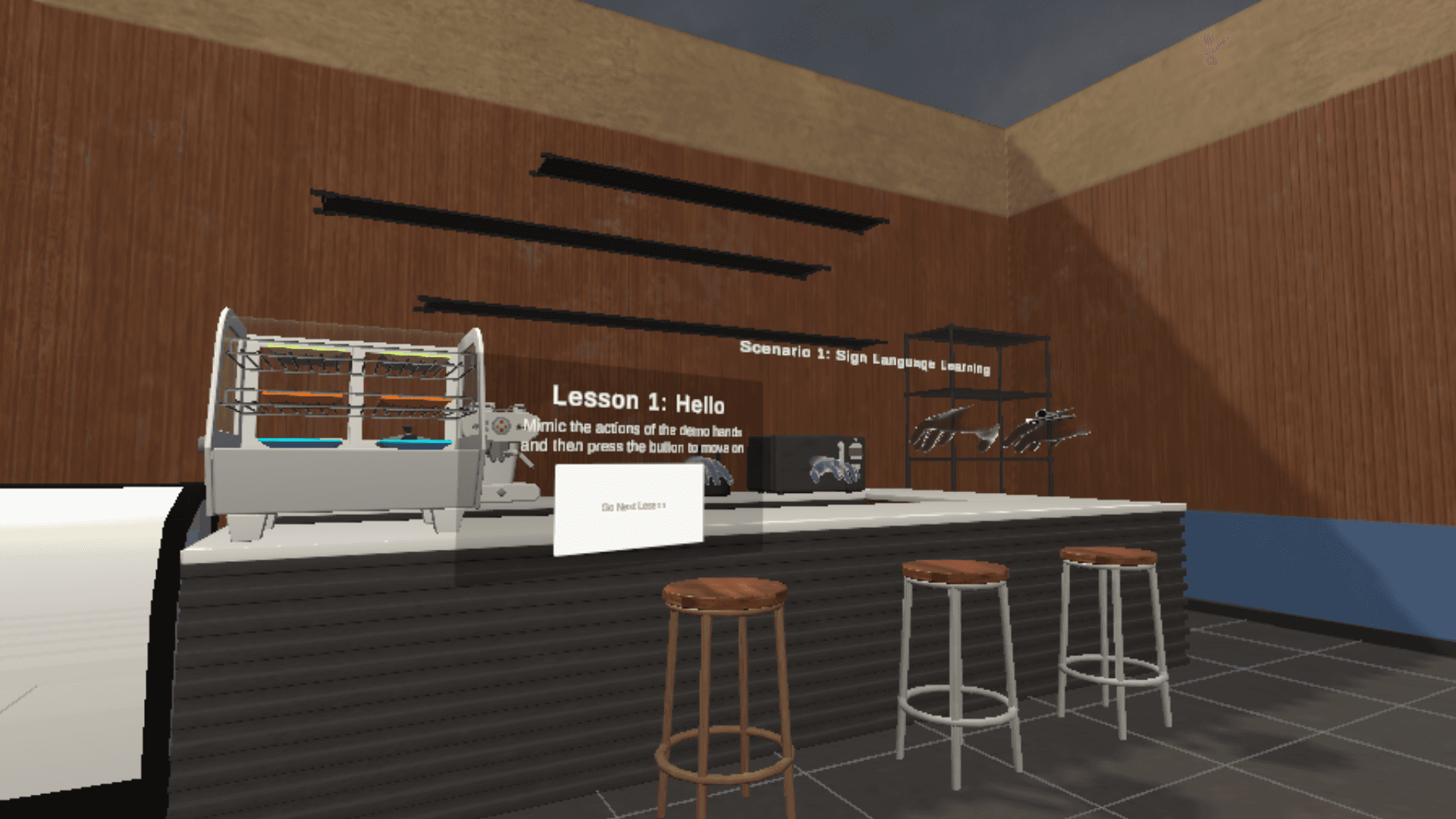
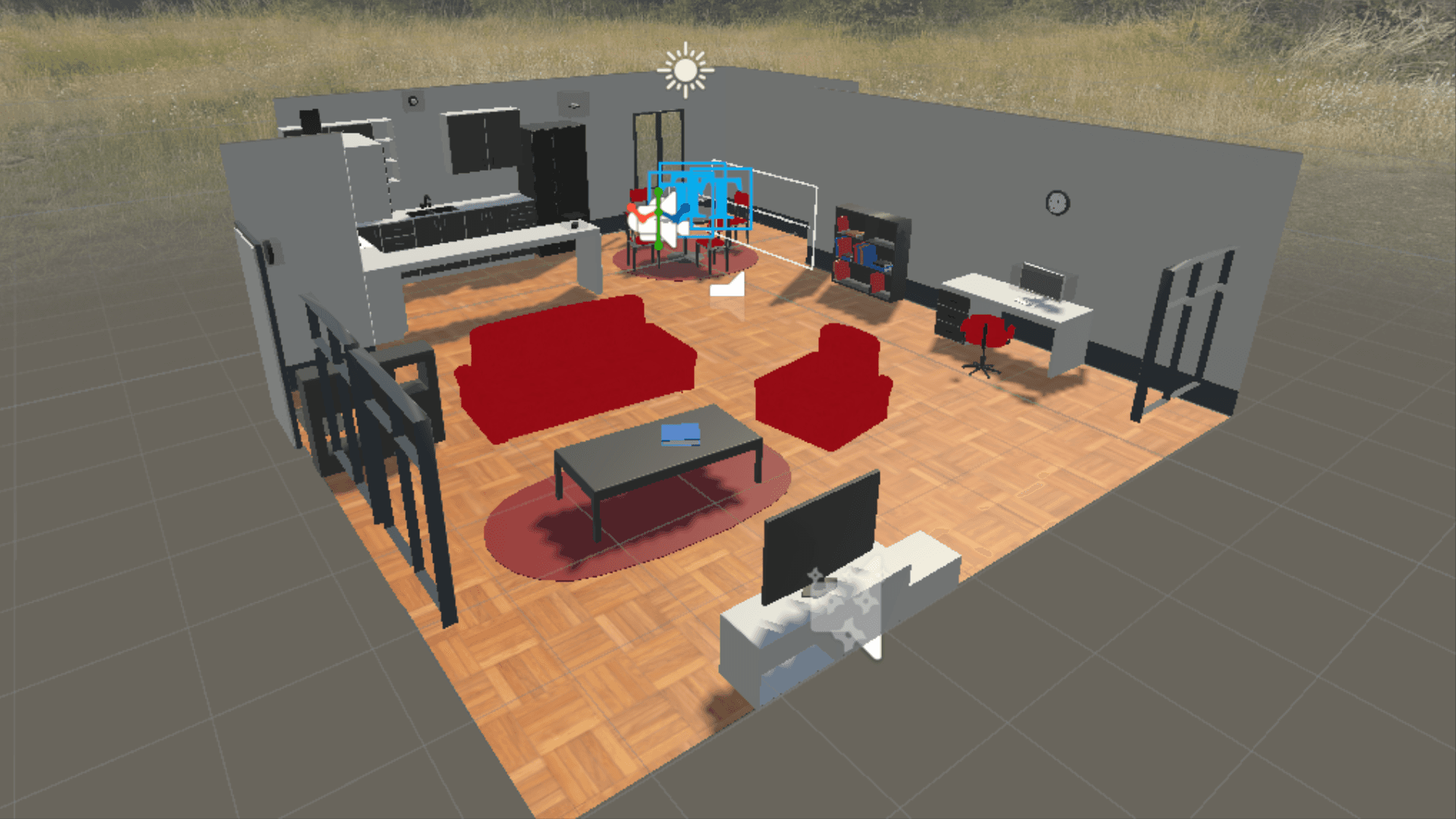
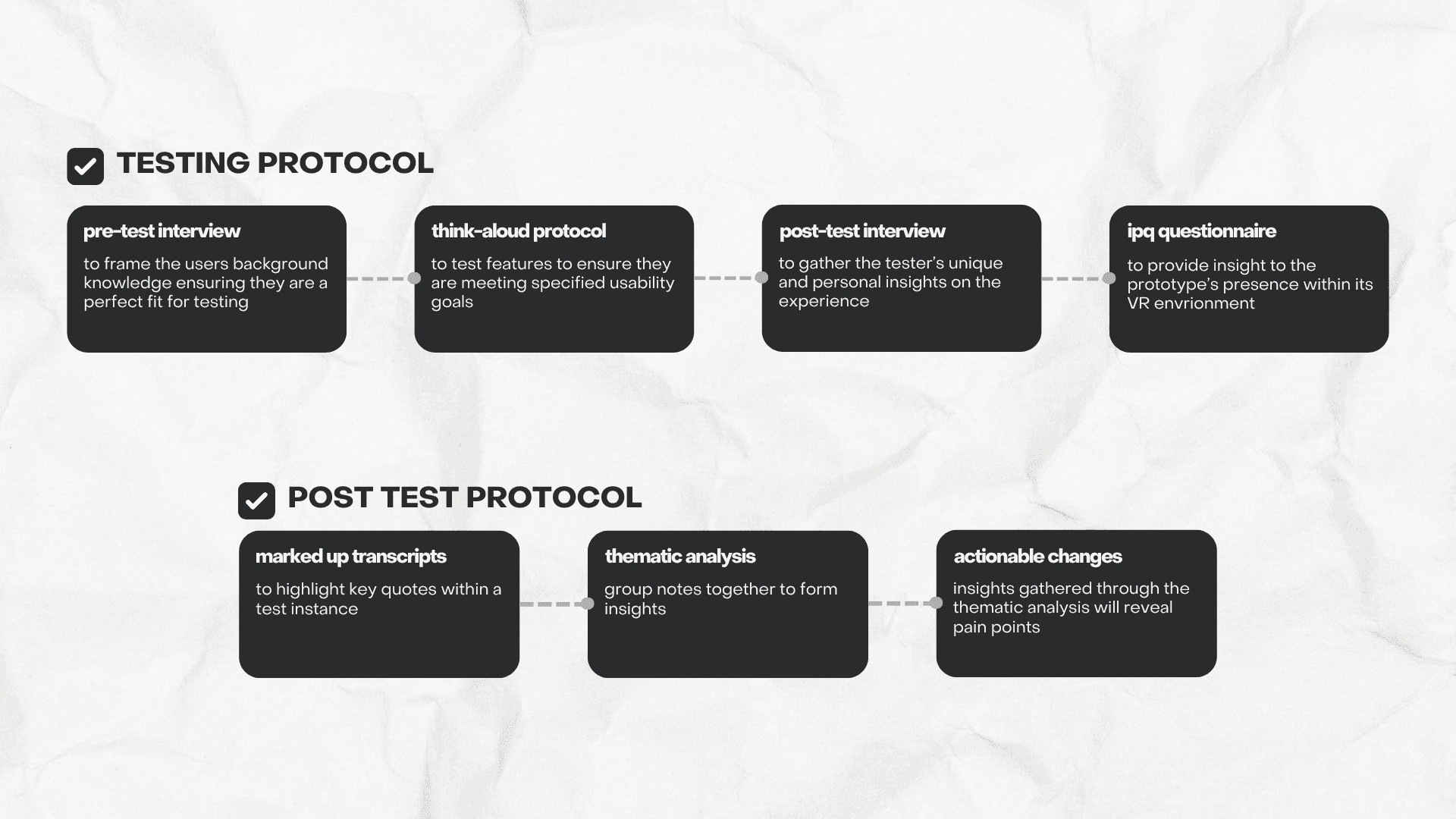
To further refine our concept we needed to conduct testing, but before any testing is done we needed to set out a plan to ensure that we are effectively testing and refining our prototype, here is what our plan looked like
Changes and Improvements 🔧
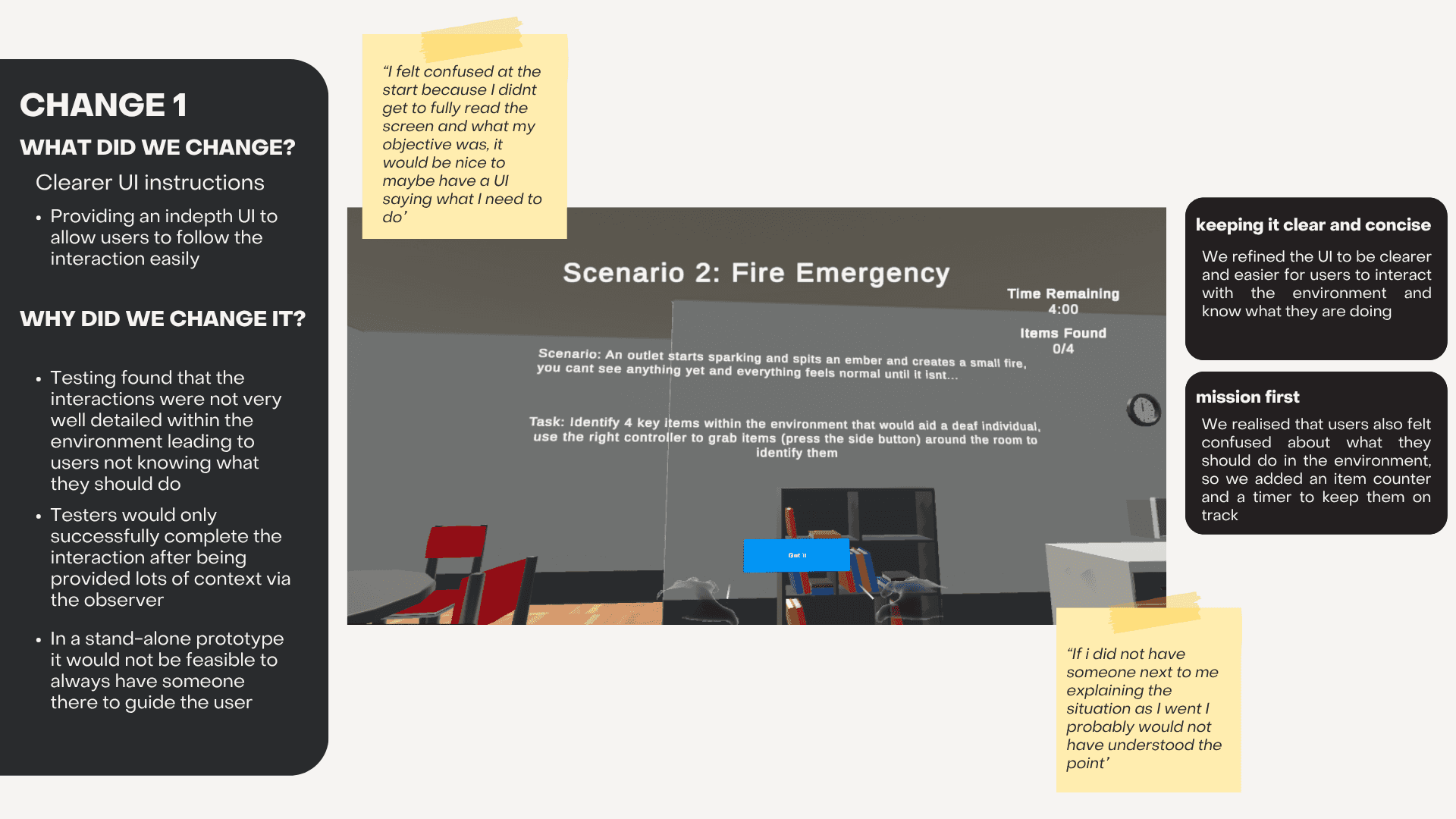
Testing provided us an opportunity to observe and gain valuable insight to how our target audience interacted with our prototype, firstly testers felt lost without clear instructions from the observer, here is how we overcame this
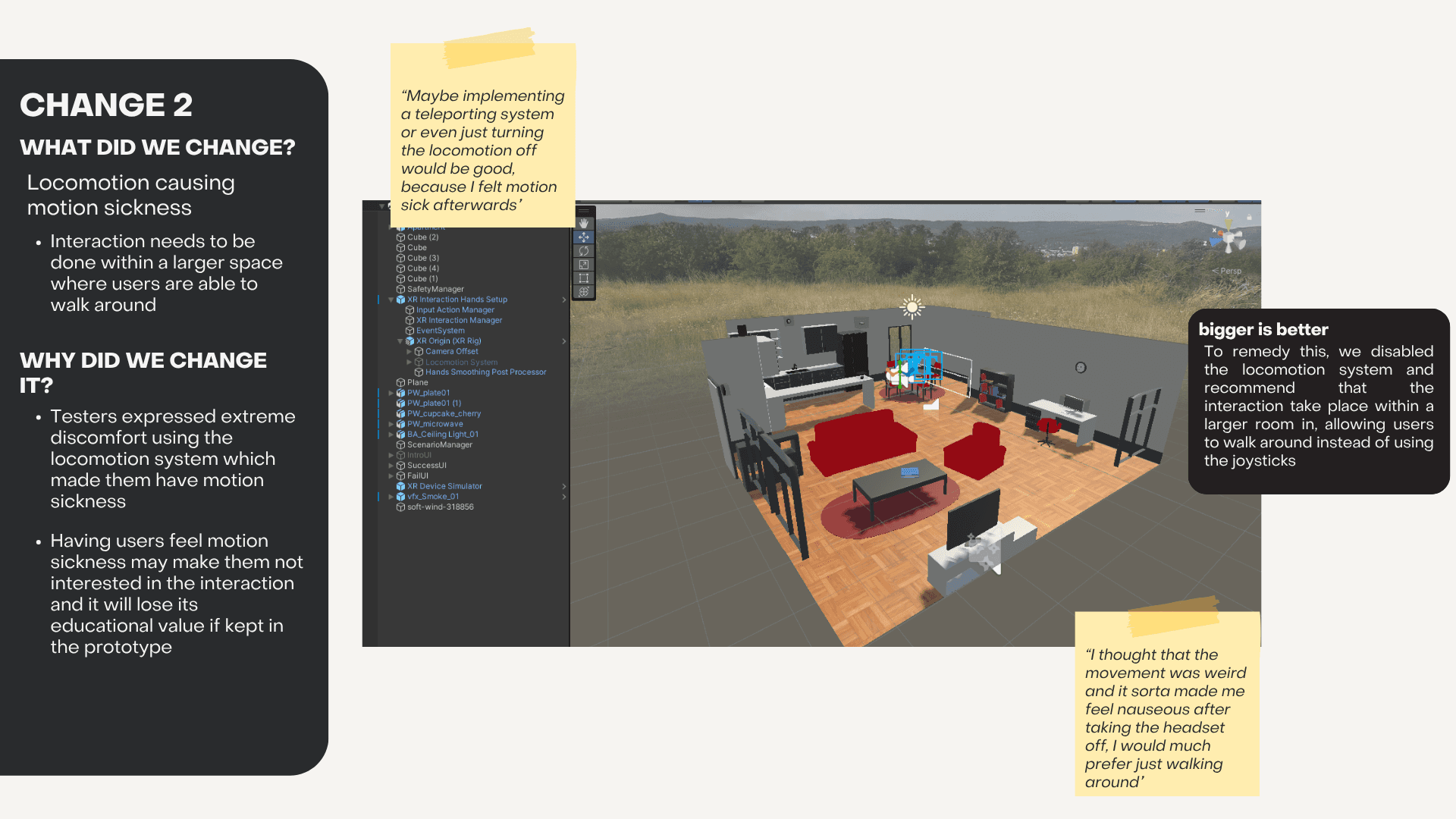
Our next main change was due to issues with locomotion causing tester motion sickness...
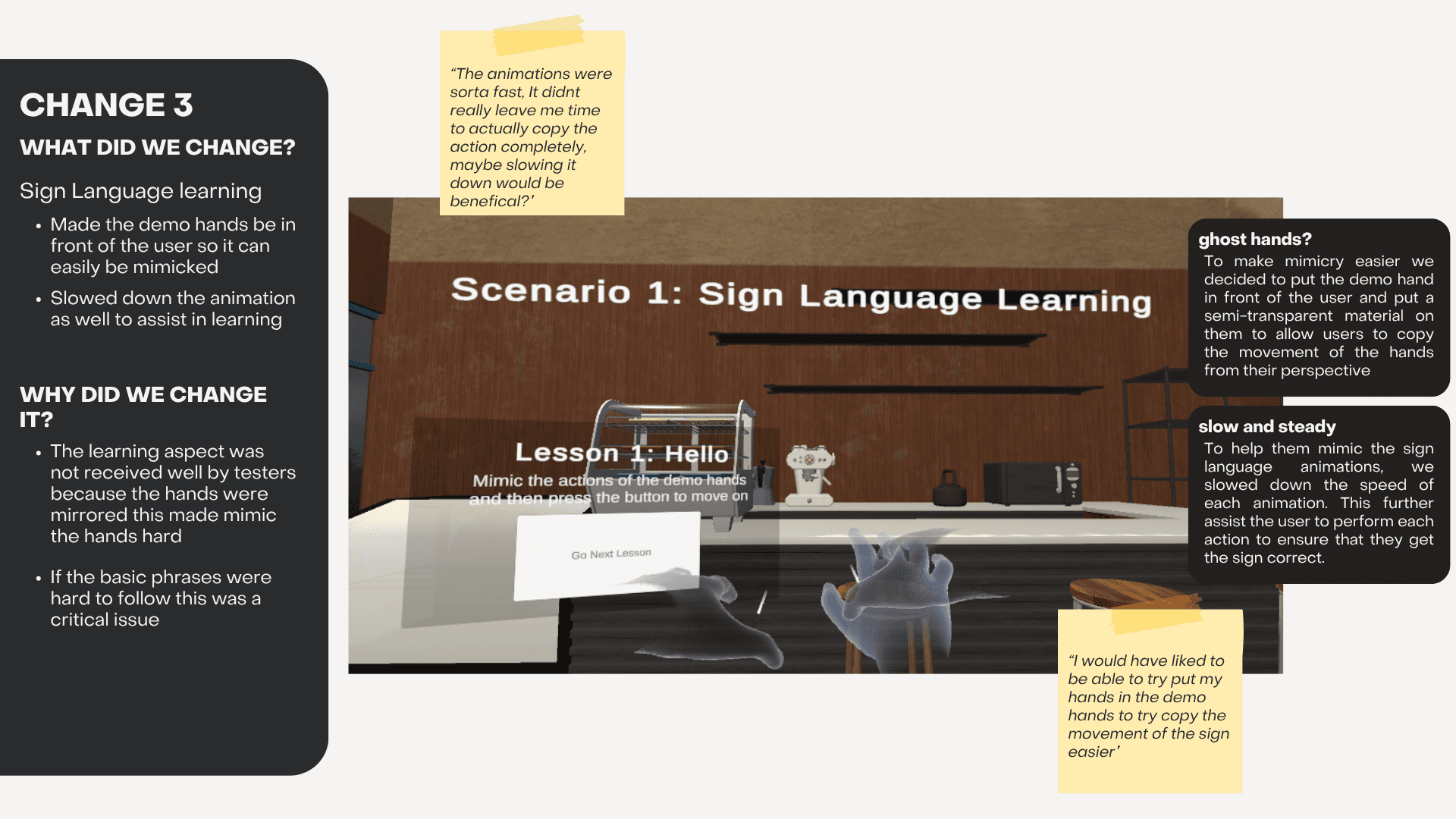
Finally the last main change faced the issue where users could not follow the animation as they were too fast and incorrectly mirrored, here is how we faced it
Final Design 🚀
Here are the final designs of the prototype!
Reflection 💭
During the development of this environment, there were numerous different challenges that we faced, these mainly included:
📍 Developing the interaction, how were we going to make the environment without having extensive Unity or scripting knowledge
📍 Hand tracking, a key component within our interaction was one of the biggest challenges we faced due to a lack of understanding its documentation as well as its implementation within the Unity space.
📍 How well our prototype answered the design brief, whether developing these specific interactions would provide the means for a safe space for our targeted audience
📍 Turning sketches and low fidelity sketches into a working prototype, how would we be able to translate the same feel of what we proposed within the last assignment well enough within our prototype
Designing Interaction in Emerging Technologies
This project taught me how to design meaningful interactions in VR without relying on advanced technical knowledge, strengthening my ability to prototype, problem-solve, and adapt within unfamiliar tools and environments.
I learned how to successfully transform low-fidelity concepts into functional immersive prototypes while preserving emotional intent, usability, and accessibility, especially when designing for sensitive, real-world contexts like deaf accessibility.
Translating Concept into Experience